

2026 Hall of Fame Profile - Bert Sorin
Bert Sorin may have one of the most unique paths to becoming a hall of famer. If you were to make a movie about it, you could easily take elements from “Rudy”, “Catch Me If You Can,” and maybe even “Forest Gump.” The former walk-on who became an All-American for South Carolina’s track and field team in the late 1990s is one of seven individuals and two teams that will be inducted into the USC Association of Lettermen’s Athletics Hall of Fame on November 5.
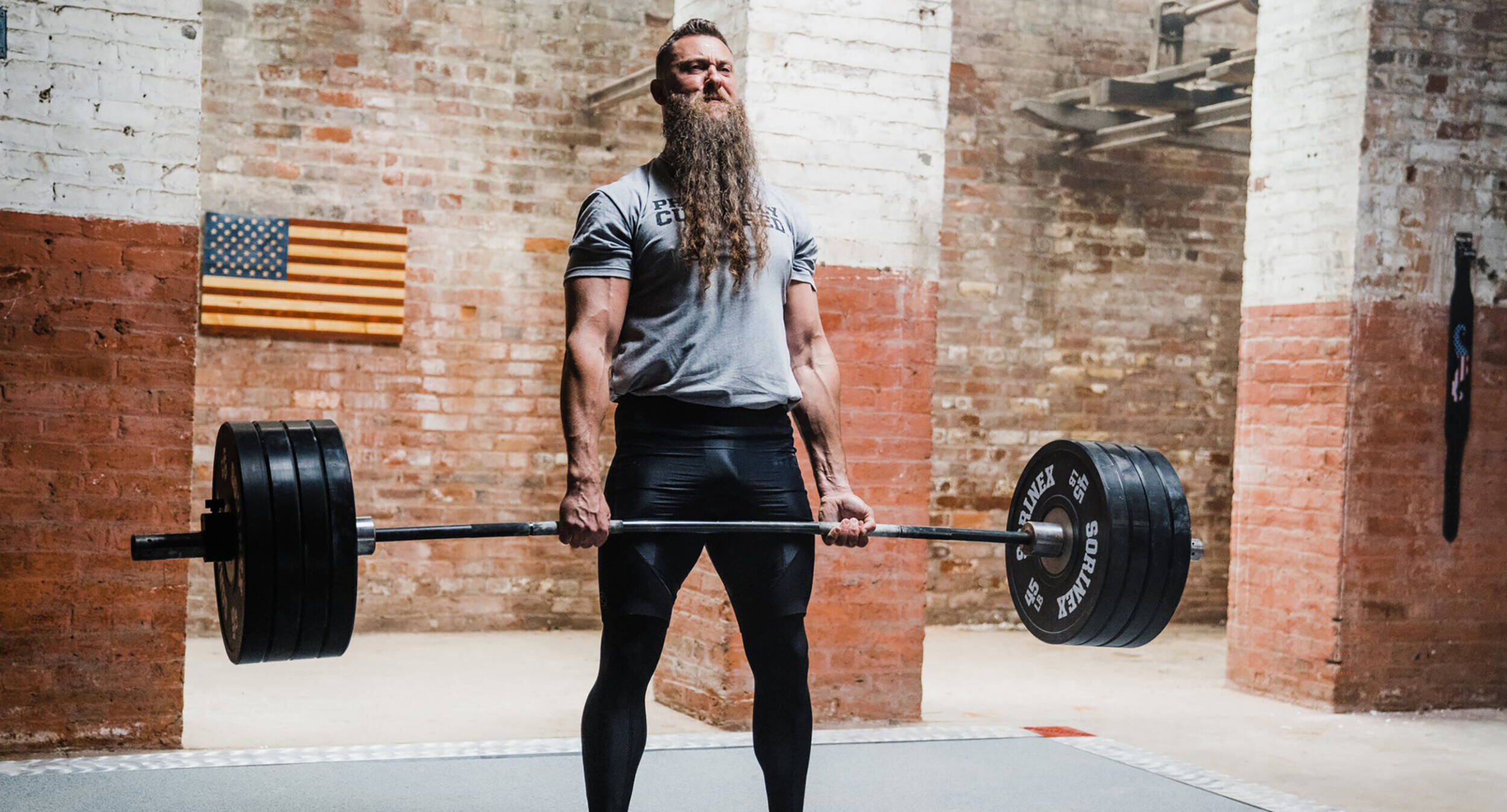
“I was pretty surprised when I found out about it,” said Sorin, who graduated in 1999 with a degree in physical education and serves as president for the family business, Sorinex, which designs and sells weightlifting equipment. It was started by his father, Richard in 1980 following a successful track and field career of his own for the Gamecocks. “It was pretty emotional for me after it set in.”
The short version of Sorin’s story was that he was an unrecruited walk-on who later earned a scholarship on the track and field team and became a four-time NCAA All-American. He was the 1999 SEC Champion and meet record holder in the 35-pound Weight Throw and ranks #3 all-time in the South Carolina record books for the event. He earned All-SEC honors in 1998 in the Hammer Throw after finishing second at the SEC Championships. He scored all four years at the SEC Indoor Championships in the 35-pound Weight and all four years at the SEC Outdoor Championships in the Hammer Throw. He was also a three-time NCAA qualifier in the 35-pound Weight Throw and two-time NCAA qualifier in the Hammer Throw. He also scored in the Javelin at the 1998 and 1999 SEC Championships.
How he actually did all of that starts by accident.
“I didn’t even know what the event was when I first got to college,” said Sorin, who grew up in nearby Irmo. “I never did it in high school. I probably knew the least about college sports as anybody who went through South Carolina Athletics. I didn’t go to college with the intent of being an athlete. I was into fishing and hunting. I did a little bit of track and wrestling in high school.”
His father’s company had built the weight room at the football stadium and the elder Sorin called in a favor to see if Bert could go into the weight room when none of the student athletes were around. As 17-year-old freshman, he didn’t pay much attention to the time, and went to the weight room where he saw a bunch of athletes from different teams working out together, so he tried to blend in.
“I started doing power cleans, and I saw a bunch of people standing in line to do a vertical jump test and thought, that looks like fun,” Sorin said. “So, I went over there and did that. I got the highest jump out of anybody in the line.”
Later he saw a group of athletes getting their body fat tested, and he decided that might be fun as well.
“I thought this is sort of cool. I get to ride all the rides!” Sorin said. “The gentleman there asks me what sport I’m with, and so I told him I was going to walk on to the track and field team, which was a total lie. I did shotput and discus in high school, so I knew enough where I thought I could lie my way through it. I was about 170 pounds at the time, and he’s looking me up and down.”
“I learned lesson after lesson that I used as a blueprint for my life over the next 30 years in building our multi-million-dollar company, basically because I wasn’t afraid of being the underdog.”
That gentleman was Larry Judge, who was the assistant coach in charge of the throw events for South Carolina track and field.
“He told me that practice starts tomorrow at 2 o’clock,” Sorin said. “I thought, man this is the one guy I couldn’t have lied to about this. I said, ‘track is a spring sport, right?’ He told me, ‘son, you’re in college now. It’s a year-round deal.’ Later, I called my dad, and he asked how my workout went, and I said, I think I joined the track team!”
Nearly three decades earlier, his father had been one of the top discus recruits in the country coming out of New Jersey and starred for the Gamecocks.
“I just showed up the next day, and they were the biggest people I had ever seen in my life! They were telling me how far they threw in high school, and I had never seen an implement go that far in my life. I knew I was so far out of my league.”
Sorin soon became fast friends with his teammates. A few months later, as he packed up his belongings to go home for Christmas break, he saw himself in the mirror and only then realized how much bigger and stronger he had become by working out with the team every day.
“I had gained 30 pounds of muscle between August and December,” Sorin said. “All of the things I had wanted in life in being bigger and stronger and having an identity as an athlete, that stuff started happening. I had a purpose. I fell in love with it! Pretty much every other thrower that is in the hall of fame was on that team with me. I realized in training with them every day, that it if I do everything they do and put forth a little more effort than they do, that maybe I could catch up to them one day.”
Early in his career, the coaching staff told him he wasn’t big enough to throw the shot or discus and asked if he could throw the hammer.
“I said that I had never seen one,” Sorin said. “They said, ‘how about the 35-pound weight?’ I said, ‘I haven’t seen one.’ They said, ‘how about a javelin?’ I said, ‘I’ve never seen one.’ They asked how far I could throw a football. I said, ‘I never played.’ Coach just looked at me, and I said, ‘I can throw a rock pretty far in the lake.’ He said, ‘that will have to do.’”
An opening on the team for javelin became available, so he started training with that along with his regular team training. He was a quick study and earned that spot.
“It was a proof of concept for me that if I trained really hard and tried, I could be somebody,” Sorin said. “I ended up picking up the hammer later, and by the end of the year I had made the Junior National Team.”
The desire to be better in sport also shifted his focus to doing better in the classroom as well. He still had a lot to learn.
Sorin admitted he knew nothing about the SEC as a conference, nor did he know anything about NCAA championships. He found out that the previous coaching staff had rewarded student-athletes with a scholarship if they earned points at NCAA nationals. He later did receive some partial scholarship assistance for doing that as a sophomore, but new head coach Curtis Frye was trying to make the program more than just a throwing team and gave what Sorin thought was “his” full scholarship to future six-time NCAA champion sprinter Terrence Trammell. While he was initially disappointed, he later understood.
“What I had to realize is that sometimes people are just better than you,” Sorin said. “He was just a better athlete, and coach had to make a business decision. When he brought Terrence in, it brought in a whole group of sprinters. Because of that, we had our highest team scoring at NCAAs my senior year. We had a well-rounded team.”
By the time he was a senior, in addition to all of the accolades he was earning, he was honored to be voted as a team captain by his teammates. That final season saw him capture his fourth All-American honor as well as an incredible performance in the SEC Championships, winning the 35-pound Weight Throw event.
“I won it with a meet-record throw after my roommate had broken the record earlier in the day,” Sorin recalled. “He threw it two feet over my lifetime best. At that point, I already had a three-foot lifetime best that day. It was the last throw of my SEC career, and I told myself to dream big. When the weight left my hand, I was watching it thinking, I can’t believe that thing is still going! It landed, and it beat my roommate by two or three inches. For the day, it was like a five-foot lifetime best! That showed me that a ton of preparation can set you up for success.
“I learned lesson after lesson that I used as a blueprint for my life over the next 30 years in building our multi-million-dollar company, basically because I wasn’t afraid of being the underdog. I learned that no matter what your problem is, you have to come up with a solution. The community and family atmosphere at South Carolina, that’s what pulled me through so many times. Those were pieces of my development that I can never thank the University enough.”
Now he’s entering elite company as a member of the Hall of Fame.
“Every man wants to be remembered in life for something. For the school to basically say that they remember me, that I did a good job, and they’re putting me in the Hall of Fame, that’s a heavy thing to take in. If I can be an inspiration in doing something that you love, regardless of the outcome, then I hope that resonates with somebody.”
Sorin and his wife, Lesley, have three children, Ezra (14), Amaris (12), and Kodiak (10).